Several suppliers may offer a pump that appears to meet the same flow and pressure. To build a shortlist, ask each one to walk through a specific model: who makes it, why it was selected, how its materials are identified, and what happens when it needs service.
You do not need every supplier to manufacture every component in-house. You do need to know who is responsible for the design, assembly, testing, and support, and which statements are backed by information you can check.
1. Confirm Who Makes and Supports the Pump
Ask which operations take place at the stated factory and which are purchased or subcontracted. Machining, rotor manufacture or coating, assembly, and testing may involve different facilities. Confirm the company that will supply the pump and take responsibility for technical questions and warranty support.
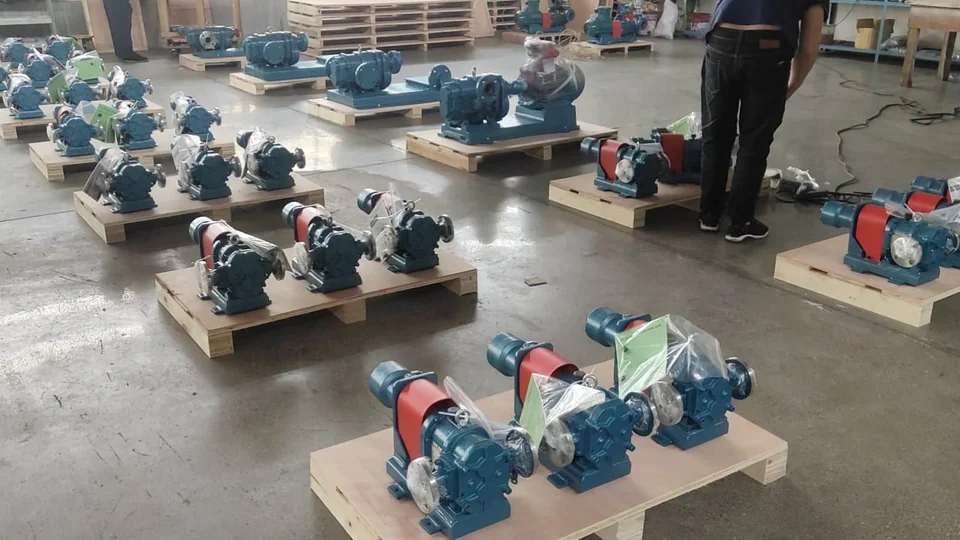
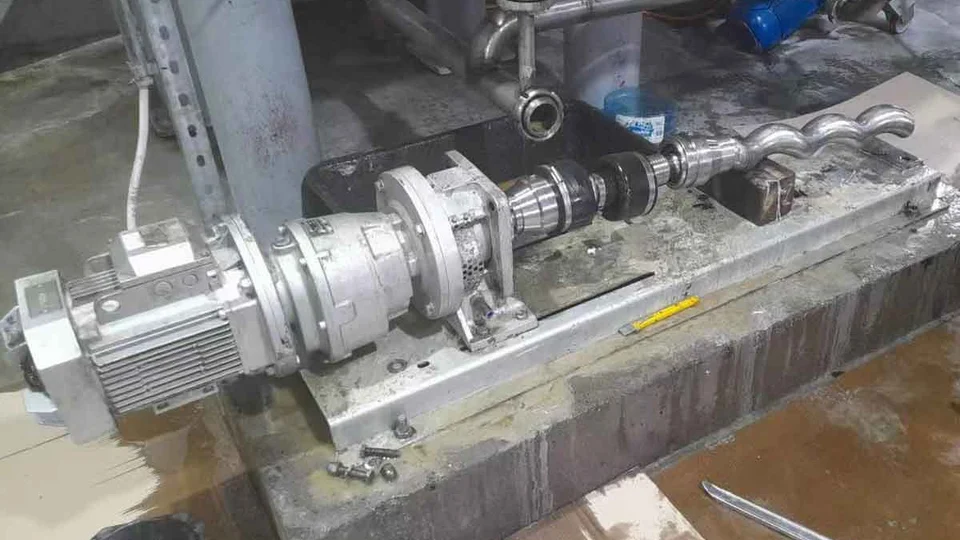
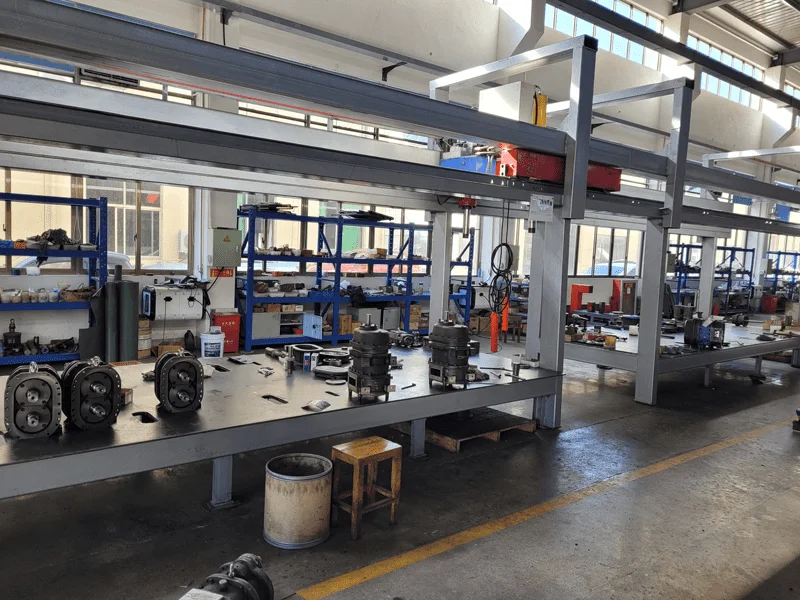
Use factory photos, video, or a visit to understand the work being described. Ask to see a relevant pump or component and have the supplier explain the process. A workshop photo can show an activity, but it does not establish the performance of a particular model, its materials, or the result of an inspection.
2. Ask Why This Model and These Materials Were Chosen
Provide the liquid, required flow range, inlet and outlet pressures, temperature, viscosity, solids, and operating hours. Include startup conditions and cleaning where they differ from normal running. Ask the supplier to identify the basis for the proposed model, speed, and drive, along with any assumptions that still need confirmation.
Request the actual material grades and compounds for the quoted casing, rotors, fitted wear parts, seals, and O-rings. A list of available options is not the same as the material list for your pump. Ask what information supports compatibility with the process and what remains unverified, rather than choosing from broad labels such as “chemical-resistant” or “heavy-duty.”
The Materials Guide covers the process information needed for that discussion. Confirm the final material package for the specific offer.
3. Walk through a Service Task on the Quoted Model
Choose a task your maintenance crew expects to perform, such as inspecting the rotors or replacing a seal. Request the procedure and the space needed to remove the components. Check whether it requires pipe removal, drive disconnection, lifting equipment, or special tools on the proposed installation.
Ask how the supplied unit and its parts will be identified for later orders. Review a parts list for the model, current lead times for the parts you plan to hold, and how configuration changes are recorded. Front-cover access alone does not establish the procedure for every repair or guarantee a short shutdown.
4. Check What the Test Evidence Actually Covers
A photograph of a test facility shows equipment, not a test result for your pump. Ask which checks are proposed for the order, what conditions and acceptance criteria apply, and what records will be supplied. If a sample report is available, check that it identifies the unit, test date, method, and results. A sample explains the reporting format; it is not the delivered unit’s record.
For a performance curve, ask what liquid, temperature, speed, and configuration it represents and how it relates to your duty. If the project requires certificates, material traceability, or witnessed inspection, confirm the scope, availability, cost, and timing. Do not assume these are included because the brochure mentions quality control.
5. Check Experience That Matches Your Operating Problem
When a supplier mentions a similar installation, ask what was similar: the liquid, startup temperature, solids, pressure, daily runtime, or maintenance constraint. An industry name by itself leaves those questions open. Where customer permission allows, ask for a reference or a project summary with its scope clearly identified.
For a replacement, describe what the existing pump struggles with and ask how the proposal addresses it. Look for an explanation tied to the operating conditions and acknowledge what still needs checking. A supplier may be unable to share customer records; ask what other evidence can support the recommendation without treating an unverified example as proof.
Once you have a shortlist, the EPC Buyer Checklist covers quotation scope, document stages, deviations, and delivery responsibilities.
6. What to Review with YANESS
Use the same questions when considering YANESS. Share the operating conditions, the problem you need to solve, and the available installation space. Ask us to identify the proposed model and materials, the selection assumptions, and the documents and inspection scope available for the offer.
You can review the existing factory photos and video and download the product brochure with model specifications, curves, and dimensional drawings. Use these to prepare questions, then confirm how the quoted configuration meets your requirements.