Viscous & Solids-Bearing Media
Consider this platform for sludge, oil-based fluids, and digestate where low-speed transfer and wet-end access matter.
Key check: Check viscosity and solids against the operating point.
Understand how rotary lobe pumps work, where they fit, and how to compare designs, materials, specifications, and configuration options for your transfer duty.
Download Brochure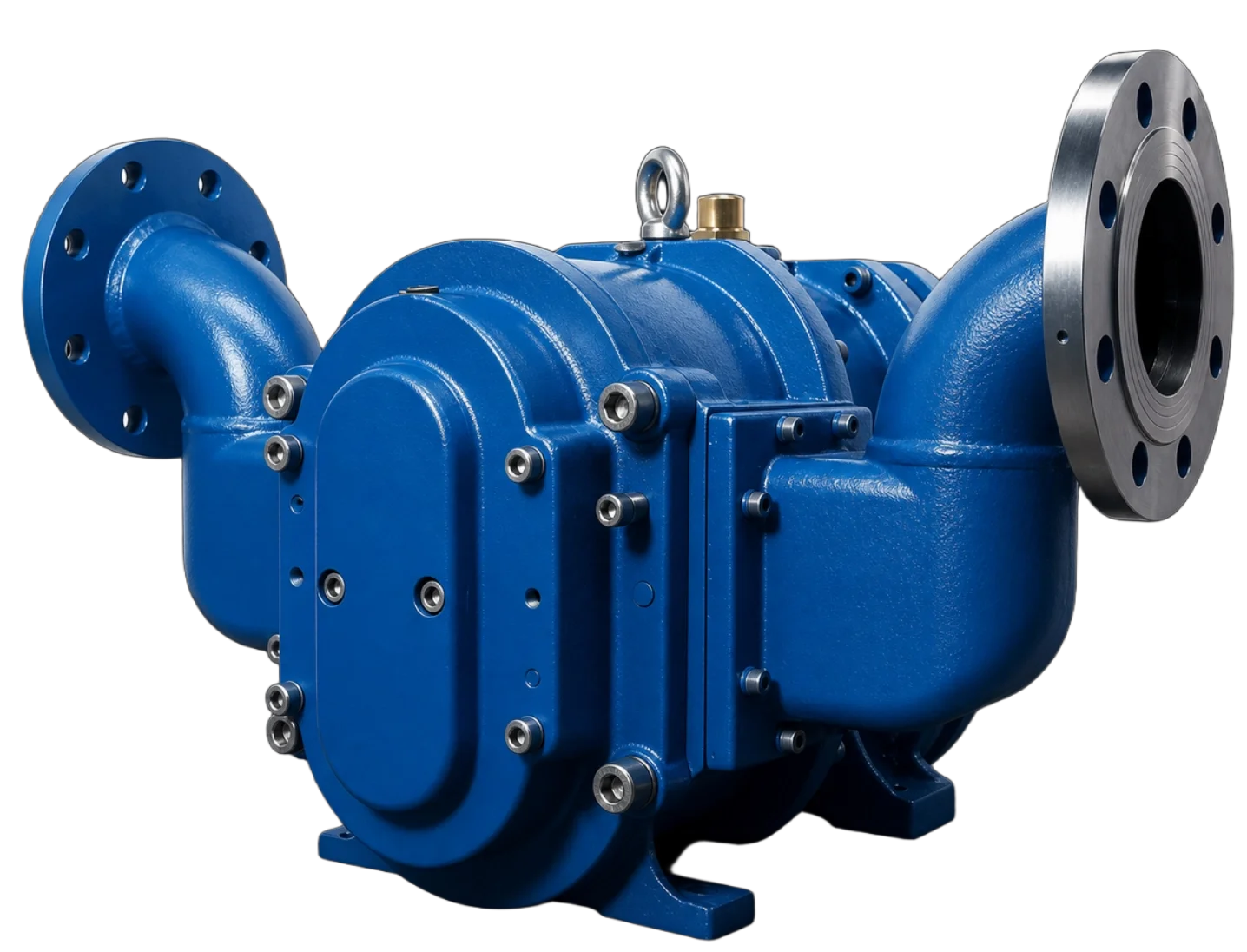
Factory-fitted reduction gears for compact packages that run a standard-speed motor at lower rotor speed.
Front-cover access for wet-end inspection, rebuilds, and spare swaps where pipework clearance allows.
Double-support is standard; single-support is available for simpler duties.
Full-speed reverse running for pipeline purge and tanker load/unload loops.
A rotary lobe pump is a positive-displacement pump. Two synchronized, counter-rotating lobes trap fluid between the rotors and casing, then carry it around the casing from inlet to outlet. Timing gears keep the rotors synchronized without rotor-to-rotor contact.
Rotor profile, clearances, speed, and fluid viscosity affect delivered flow, solids passage, and pulsation. Explore the working principle →
Typical duties include sludge, oil, digestate, and viscous process fluids. Suitability depends on suction conditions, solids, abrasion, and material compatibility; clean, low-viscosity transfer may favor another pump type. Review industry applications →
Start with flow, differential pressure, operating and startup viscosity, temperature, and solids. Then review inlet conditions, wetted materials, seals, drive speed, and maintenance access. Open the pump selection guide →
The cutaway marks the key service and drive parts. Each one affects seal life, maintenance access, or fluid containment on the duty.
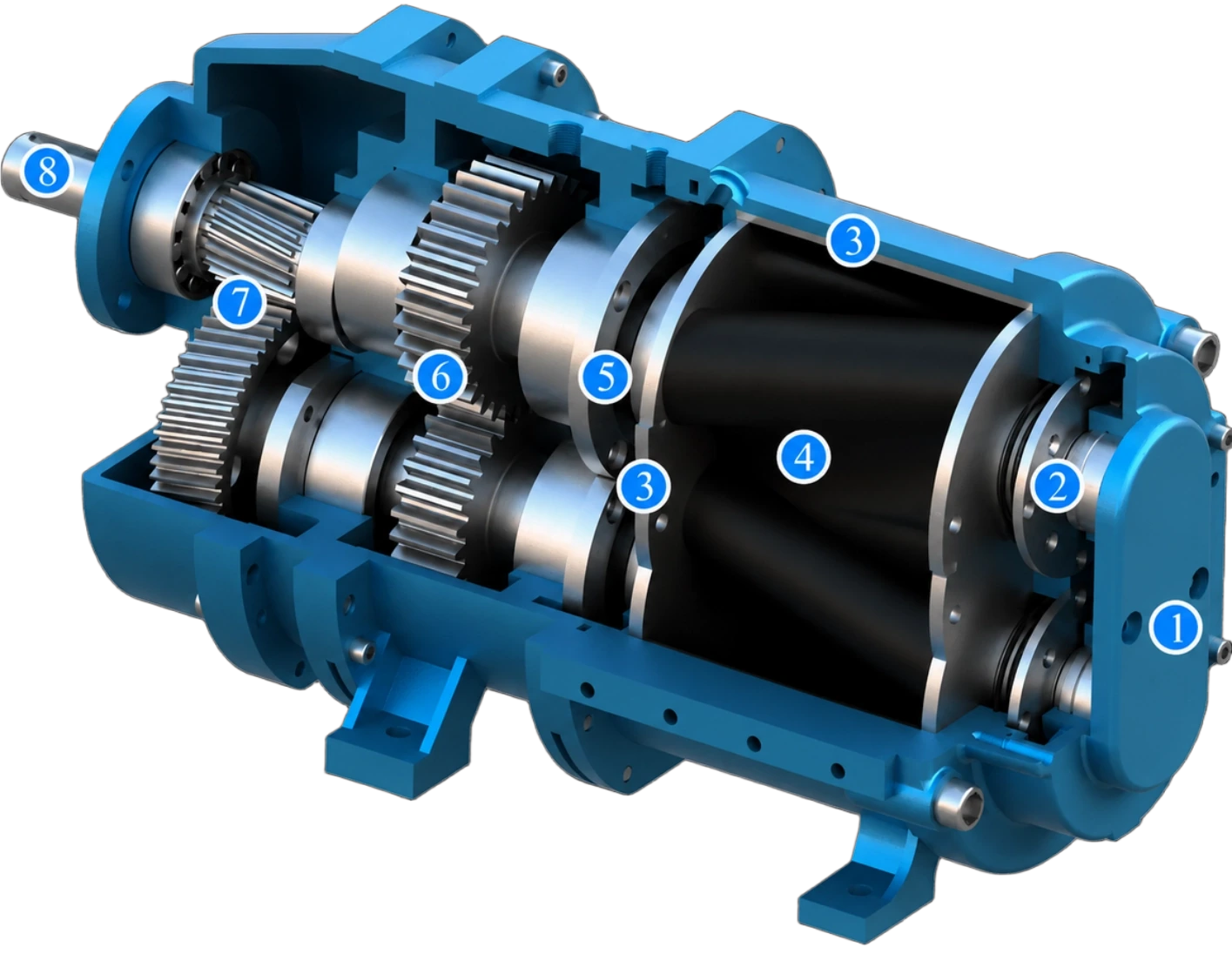
Allows wet-end inspection and maintenance without dismantling the pump, where pipework and clearance allow.
The standard double-support layout maintains rotor alignment and handles higher-pressure duties. Single-support is available where simplicity or access takes priority.
Optional liners protect casing wear areas and extend service life on abrasive or solids-bearing duties.
Non-contacting lobes enable low-shear, low-pulsation transfer. Bi-lobe, tri-lobe, and helical profiles can be selected by duty.
The oil-filled intermediate chamber lubricates the seals and protects the gear unit if fluid leaks past the seal.
AGMA Class 9 timing gears synchronize the lobes so rotor clearance is maintained without rotor-to-rotor contact.
Factory-fitted speed reduction sits in the drive housing when a standard-speed motor and lower rotor speed are needed without an external reducer.
The shaft and drive end are matched to bearing layout, torque load, and service clearance for the installation.
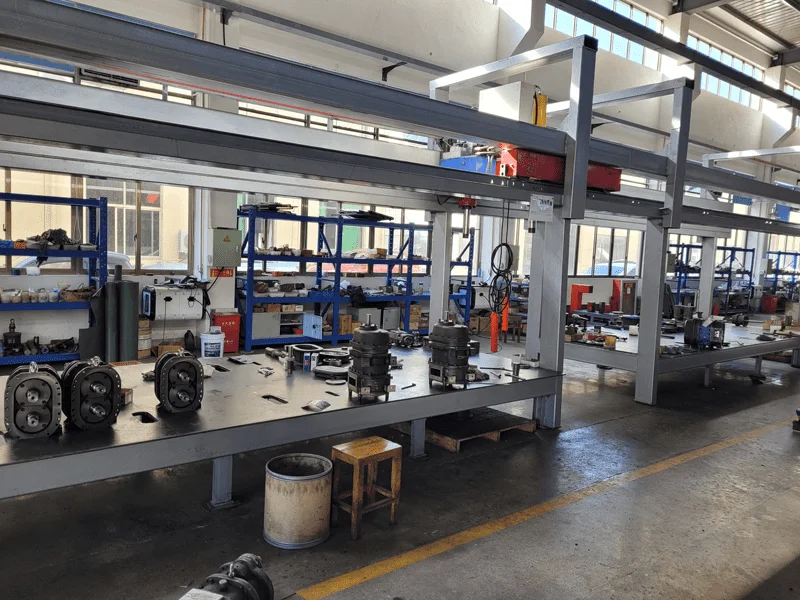
Configured pump packages are assembled and checked against the order scope before shipment.
Standard model range for YANESS rotary lobe pumps. Use this table as a first-pass check to see which models cover your flow rate and pressure requirements.
Scroll horizontally to compare all specifications ↔
| Model | Rated Speed (rpm) | Rated Flow, USGPM | Max Pressure, psi |
|---|---|---|---|
| YL 10 | 0 - 760 | 0 - 26.5 | 230 |
| YL 18 | 0 - 720 | 0 - 44 | 230 |
| YL 28 | 0 - 720 | 0 - 66 | 230 |
| YL 52 | 0 - 630 | 0 - 110 | 260 |
| YL 87 | 0 - 530 | 0 - 150 | 230 |
| YL 150 | 0 - 530 | 0 - 260 | 230 |
| YL 196 | 0 - 640 | 0 - 420 | 230 |
| YL 224 | 0 - 530 | 0 - 400 | 230 |
| YL 300 | 0 - 530 | 0 - 530 | 230 |
| YL 360 | 0 - 550 | 0 - 660 | 230 |
| YL 540 | 0 - 550 | 0 - 970 | 230 |
| YL 720 | 0 - 550 | 0 - 1320 | 230 |
| YL 990 | 0 - 500 | 0 - 1630 | 150 |
| YL 1450 | 0 - 500 | 0 - 2420 | 150 |
| YL 1980 | 0 - 500 | 0 - 3300 | 150 |
| YL 2900 | 0 - 500 | 0 - 4840 | 150 |
| YL 3434 | 0 - 500 | 0 - 5720 | 150 |
| YL 3830 | 0 - 500 | 0 - 6380 | 145 |
Nominal ranges are for initial screening. Final sizing depends on the fluid, viscosity, suction conditions, and required operating point; the maximum flow and pressure may not be available together.
Ask an engineer to confirm your model →
For model specifications, performance curves, and dimensional drawings, see the product brochure.
Download Brochure PDF · 31 pages · 13.4 MBReview the available material, rotor, seal, drive, and layout choices. The final combination is confirmed through duty and installation review.
Casing and cover materials, rotor elastomers, optional liners, and wear parts.
Bi-lobe, tri-lobe, or helical profiles, with duty-specific rotor clearances.
Mechanical seal arrangement and seal-face materials, with isolation chamber requirements reviewed.
Integrated reduction or external drive, motor selection, and operating speed.
Port orientation and package footprint, with clearance for front-cover removal and maintenance.
To prepare for configuration review, check the sizing checklist →
Start with your medium and installation needs. Compare alternatives for clean, low-viscosity transfer, and review sanitary or special requirements before selecting a configuration.
Consider this platform for sludge, oil-based fluids, and digestate where low-speed transfer and wet-end access matter.
Integrated drive options and front-cover access can suit space-limited packages that need in-place maintenance.
For clean liquid at high flow, compare centrifugal and rotary lobe options against the required duty.
Cleaning, pressure, material, or documentation requirements need a dedicated review to establish the available configuration.
Share the information you have below so YANESS can review the duty and identify any details needed for sizing.
Incomplete data is welcome. For a replacement, include the current pump model, nameplate details, and failure symptoms. Site and nameplate photos can be shared during follow-up.
Tell us what you need to transfer. YANESS reviews your duty before recommending a pump model and configuration.
Typical reply within 1 business day.
Browse application, design, sizing, and maintenance guides for more detail.