“We have changed the stator again. Would a different pump cost less to run?” Before requesting a replacement quote, collect the dates, parts invoices, work records, and time out of service. They help establish whether the main expense is the part, the repair work, or the effect on the process.
Compare options that meet the same flow, pressure, liquid, and operating schedule. Keeping or repairing the existing pump, changing its installation, and replacing it with another configuration all deserve consideration. A rotary lobe pump should be assessed on the same basis.
| Cost item | What to record |
|---|---|
| Parts and materials | Parts used, quantities, actual cost, and cleaning or disposal costs attributable to the job. |
| Labor and services | Crew-hours and the stated rate, plus separately charged lifting, contractor, or other services. |
| Time out of service | Stop and return-to-service times, hands-on repair time, and any waiting for parts or access. |
| Process costs | Actual lost output, bypass pumping, hauling, or other additional costs. Identify what a standby pump covered. |
| Extra delivery costs | Emergency freight or other additional charges, excluding amounts already counted on the parts invoice. |
Elapsed downtime is a duration, not automatically a production loss. Avoid counting the same expense in more than one line.
1. Separate Repair Costs from Process Losses
Add the parts, crew-hours, and additional services used for the maintenance job. State the labor rate and what it includes. Preparation, cleaning, pipe removal, and restart checks may all use crew time; do not add them again as separate labor charges if they are already in the total.
Then assess the effect on the process. If a standby pump kept production running, the full outage duration is not lost production time. If you paid for temporary pumping or hauling, record the actual additional cost. Where lost output has a financial value, use the site’s agreed method and check that it does not duplicate recovery costs already included.
2. Use the Actual Stator and Repair History
List the date, operating hours where known, parts changed, and findings for each event. Separate scheduled replacement from unexpected failure. Include changes in liquid, cleaning, speed, or inlet conditions so a change in duty is visible beside the service interval.
Mark a suspected cause as suspected. Repeated replacement does not establish whether the cause is wear, materials, installation, or operating practice. If the same problem would affect the proposed replacement, changing pump type alone does not resolve it. Ask what corrective work is needed for each option.
Use a stated reporting period and operating hours when comparing event frequency. A few unusual failures during a process change may not represent a normal year. Keep the individual records as well as any average.
3. Compare the Installed Service Task for Each Option
Compare the specific existing and proposed models. Check how their relevant wear parts are removed, whether pipework or the drive must be disturbed, and the clearance, tools, and lifting equipment required. Do not assume every progressive cavity pump has the same stator-removal arrangement or every rotary lobe pump has the same service procedure.
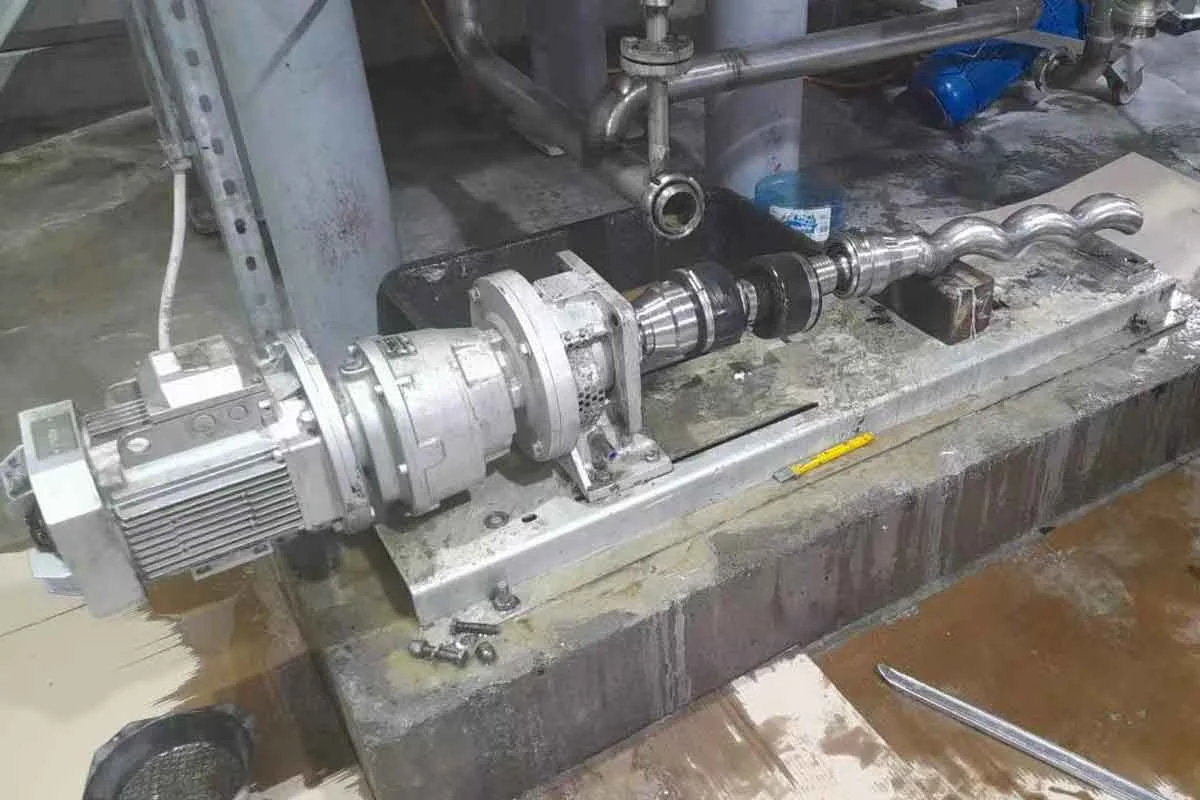
Ask what is included in each quoted repair time: isolation, draining, cleaning, parts removal, reassembly, and restart checks. A workshop demonstration and an installed repair are different starting conditions. Use the same task scope when estimating labor and downtime for the alternatives.
The maintenance-access guide covers the drawing and procedure checks. Confirm the proposed installation, rather than assigning a standard repair time to an entire pump family.
4. Include the One-Time Cost of Changing the Installation
Record the supplied equipment and any changes needed to piping, foundations, drive, controls, or protective devices. Include installation, commissioning, initial spares, and any changeover outage that applies. Confirm what each quotation includes so a bare pump is not compared with a complete installed package.
Before accepting the cost comparison, confirm that the alternative meets the transfer requirements: flow range, pressure, inlet conditions, liquid and solids, temperature, control needs, and any dosing or reversal requirement. Ask for the proposed configuration and supporting information. A cheaper service task does not compensate for a pump that cannot do the job.
Use the lobe vs progressive cavity comparison to prepare technical questions. Confirm the answer for the actual models and duty being considered.
5. Compare a Common Period and Test the Assumptions
Choose the same period and operating hours for all options. Add the one-time costs that apply and the expected recurring service and process costs over that period. Include energy or other operating costs if you are comparing total ownership cost, and state the scope. Keep the existing pump’s recorded costs separate from the alternative’s estimated costs.
Where service intervals or repair times are uncertain, compare a shorter and a longer interval or outage scenario. Show what happens if there is no reduction in failure frequency. If the expected saving disappears with a modest change in an uncertain assumption, gather more evidence before treating the replacement as a financial improvement.